
- National Observance: Today, May 15, 2026, marks the annual observance of Peace Officers Memorial Day, a federal day of remembrance.
- Presidential Proclamation: By law and tradition, the President of the United States has issued a proclamation mandating that the American flag be flown at half-staff at all federal buildings and grounds.
- Scope of Honoring: The gesture pays tribute to local, state, and federal law enforcement officers who have been killed or disabled in the line of duty.
- National Police Week: This observance is the centerpiece of National Police Week, which draws thousands of law enforcement families to Washington, D.C.
- Protocol Specifics: Flags should remain at half-staff from sunrise until sunset today, unless otherwise specified by local gubernatorial orders for additional regional tributes.
NEW YORK – May 15, 2026
If you looked out your window this morning or drove past a post office, school, or municipal building, you likely noticed the American flag sitting somberly at the midpoint of its staff. This visual signal, one of the most powerful symbols of national mourning in the United States, is not a response to a sudden tragedy or a new international crisis. Instead, it is a deliberate and legal act of remembrance for Peace Officers Memorial Day.
In the fast-paced news cycle of 2026, where digital notifications often outpace physical symbols, the lowering of the flag remains a poignant "pause button" for the nation. It serves as a collective acknowledgment of the inherent risks faced by those in uniform. For the families of the fallen, this gesture is more than just protocol; it is a validation of the ultimate sacrifice made by their loved ones in the pursuit of public safety.
As an investigative journalist who has spent decades covering the Department of Justice and local precincts across the country, I have seen the profound impact this day has on the law enforcement community. Understanding why the flags are lowered today requires looking beyond the fabric and the rope, into the history, the legal mandates, and the evolving landscape of American policing in 2026.
The Full Story: The Significance of May 15
Background and Context
The tradition of Peace Officers Memorial Day dates back to October 1, 1962, when President John F. Kennedy signed a joint resolution of Congress designating May 15 as a day to honor those who have lost their lives in the line of duty. This was later amended by the Violent Crime Control and Law Enforcement Act of 1994, which explicitly directed that the flag be flown at half-staff on this day.
Unlike many other flag-lowering events that are reactionary—occurring after the passing of a statesman or a mass tragedy—May 15 is a "standing" half-staff day. This means that regardless of current events, the flag is lowered as a matter of federal law. It stands alongside other specific dates like Memorial Day (where it is half-staff until noon) and Patriot Day (September 11) as a permanent fixture on the national calendar of mourning.
Historically, the distinction between "half-mast" and "half-staff" is worth noting for the curious observer. While the terms are used interchangeably in common parlance, "half-mast" technically refers to flags on ships or at naval stations, while "half-staff" refers to flags on land. Today, across every state and territory, both terms signify a nation in reflection.
Key Developments in 2026
The 2026 observance comes at a pivotal time for law enforcement. According to preliminary data from the National Law Enforcement Officers Memorial Fund, the past year has seen a shift in the causes of line-of-duty deaths. While felonious assaults remain a primary concern, there has been an increased focus on the long-term health effects and mental health challenges facing officers, which are increasingly being recognized during National Police Week ceremonies.
In Washington, D.C., the 2026 Candlelight Vigil saw record attendance. The names of 184 officers were newly engraved on the memorial walls this year, representing those who died in 2025 and those whose historic sacrifices were only recently documented. The ceremony this year has leaned heavily into the integration of technology, with digital tributes allowing families who cannot travel to the capital to participate in the "Roll Call of Heroes."
Furthermore, several states have expanded their own regional proclamations. In states like Illinois, California, and New York, governors have issued concurrent orders to ensure that state-owned buildings follow the federal lead, often adding their own specific tributes to local heroes who fell in the preceding twelve months.
Impact Analysis
The impact of lowering the flag is multifaceted. Socially, it fosters a sense of unity. In a period of American history often characterized by political polarization, the sight of the flag at half-staff for fallen officers frequently serves as a rare point of consensus. It reminds the public of the thin line between civil order and chaos, and the personal cost required to maintain that line.
Politically, Peace Officers Memorial Day often serves as a catalyst for legislative discussion. In 2026, we are seeing renewed debates regarding federal funding for officer safety equipment, enhanced mental health resources, and the "Social Security Fairness Act," which affects the survivor benefits of many law enforcement families. The lowered flags provide a somber backdrop for these policy negotiations.
Psychologically, for active-duty officers, the gesture is a message of support. In an era where recruitment and retention in law enforcement have hit historic lows, these public displays of gratitude are vital for morale. It signals that the government and the citizenry recognize the gravity of their profession.
Expert Perspective: Why This Matters Beyond the Facts
In my years of reporting from the front lines of civic crises, I have learned that symbols are the language of a nation's soul. When we ask "why are the flags at half-mast today," we are essentially asking what our society values. By lowering the flag today, the United States is making a definitive statement that the rule of law is maintained by individual human beings who are willing to risk everything.
What is particularly interesting about the 2026 landscape is the intersection of traditional memorialization and modern societal reform. We are currently in a "Post-Reform" era where the conversation about policing has moved from purely adversarial to a more nuanced understanding of community-based safety. The flags at half-staff today represent not just the "old guard" of policing, but a new generation of officers who are trained in de-escalation and crisis intervention.
The true depth of this day lies in its inclusivity. It honors the small-town sheriff, the big-city detective, the tribal police officer, and the federal agent. In a world that is becoming increasingly digital and detached, the physical act of lowering a flag is a necessary, tactile reminder of our shared humanity and the physical reality of sacrifice.
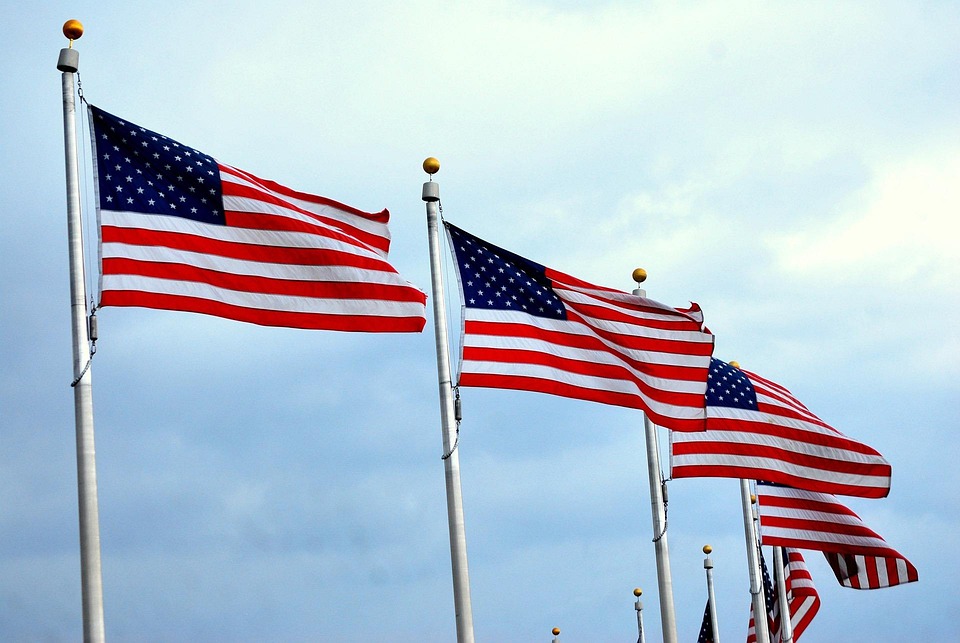 Image Credit: pixabay.com
What's Next: Future Implications
Image Credit: pixabay.com
What's Next: Future Implications
Looking ahead, the way we observe Peace Officers Memorial Day is likely to evolve. There is a growing movement to include "invisible" line-of-duty deaths—such as those resulting from job-related PTSD—in the criteria for flag-lowering honors. By 2027 and 2028, we may see the U.S. Flag Code updated to more formally address these modern tragedies.
We should also watch for how international partners adopt similar protocols. The United States has been a leader in formalized law enforcement remembrance, and there are discussions within Interpol to create a global day of recognition for peace officers, modeled largely after the American May 15 tradition.
Finally, as the 2026 mid-term elections approach, expect the imagery of today’s lowered flags to appear in political discourse. Candidates across the spectrum will likely use this day to signal their stance on "law and order" versus "justice reform." As citizens, our role is to look past the rhetoric and remember the individuals whose names are carved into the granite of the national memorial.
FAQ: Understanding Flag Protocol and Peace Officers Memorial Day
Who has the authority to order flags to half-staff?
The President of the United States has the primary authority to order the flag to half-staff for federal buildings, grounds, and naval vessels. However, state Governors also have the authority to order the flags in their respective states to half-staff to honor the death of a present or former official or a member of the armed forces from that state.
Is it "half-mast" or "half-staff"?
Technically, "half-mast" is the term used in the Navy and on ships. "Half-staff" is the correct term for flags flown on land. However, most people use the terms interchangeably without issue in general conversation.
How long will the flags remain at half-staff today?
For Peace Officers Memorial Day, the flag is typically flown at half-staff from sunrise until sunset. This differs from Memorial Day, where the flag is flown at half-staff only until noon and then raised to full-staff for the remainder of the day.
Does this order apply to private homes and businesses?
While the federal mandate specifically applies to government buildings, private citizens and businesses are encouraged to follow suit as a mark of respect. There is no penalty for not lowering a private flag, but it is considered proper etiquette on this day.
What happens if May 15 falls on a weekend?
The observance of Peace Officers Memorial Day and the lowering of the flag occur on May 15 regardless of the day of the week. In 2026, May 15 falls on a Friday, making it a prominent bookend to the work week for many municipal employees.
Why are flags sometimes at half-staff for several days?
The duration of a half-staff order depends on the person or event being honored. For a deceased President, it is 30 days. For a Vice President or Chief Justice, it is 10 days. For Peace Officers Memorial Day, it is a single-day observance.
Are there any other reasons the flag might be down today?
While May 15 is the primary reason, it is possible for a state governor to have a concurrent order for a local dignitary or a fallen local hero. In such cases, the state order usually aligns with the federal one for this specific day.
Bottom Line
Today’s flags at half-staff are a silent but powerful testament to the 2026 Peace Officers Memorial Day. It is a day to set aside political differences and recognize the human cost of maintaining a safe and orderly society. Whether you view it through the lens of history, law, or personal connection, the lowered flag is a call to reflect on the bravery of those who stood in the gap for others and never returned home.
